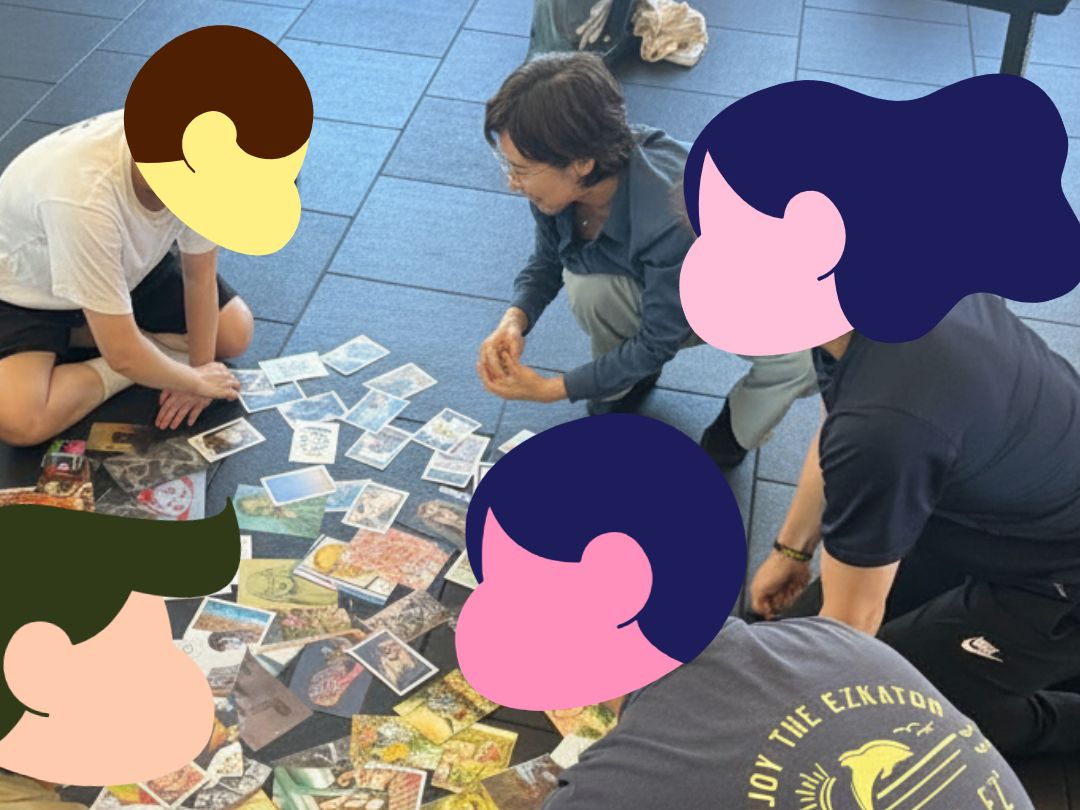
Communi-T’s flagship programme <Welcome to My Body> was designed to give trans people a chance to affirm their bodies and try exercise as part of a healthy way of life.
Following the first cohort in March, the second cohort, held on 23 and 30 May, had six trans participants. Within the Welmaba programme, four hours per session, we took time to look at mind and body together and get comfortable with our own bodies.
The first half, the mind programme, was grounded in counselling: feeling your body and listening to its stories. The second half, the exercise programme, was about actually moving, trying the exercise you need and imagining how you’ll keep exercising.
🔗 Welcome to My Body, second cohort review ①: personal trainer Goun
We’ve put together the reviews of this cohort from reflections written by the two instructors who, as the expert group, were involved from planning to delivery.
Following personal trainer Goun’s review last time, this time we share a review from Woo Seung-yeon/Rider, lead counsellor at DDingDong!
Hello, I’m Woo Seung-yeon/Rider, facilitator of the mind programme on 〈Welcome to My Body〉.
For trans people, the body is not just a body. It is the time we’ve lived and a space we have to pass through every day. For some, the body is where they reveal themselves; for others, it becomes a place where they must hide. Tired of having to fit rigid standards while hoping to ‘pass’, or in situations where erasing yourself in ‘stealth’ is the only way to be safe, the body becomes something to be endlessly judged and managed.
Shrinking in the face of rejection and exclusion, longing to be accepted as you are, yet growing distant from your own body. The time spent living at a distance from the body piles up. So the body often becomes a contradictory place: you have to stay but want to leave; it’s yours but feels foreign; you depend on it to live, yet at times it’s your greatest source of pain. 〈Welcome to My Body〉 was an attempt to meet that body again.
〈Welcome to My Body〉 doesn’t see the body as something to ‘manage’ or ‘train’. Nor does it treat the body as a problem to fix. Instead, we wanted to form a ‘relationship’ with the body and explore together the very ‘experience of living’ in it. We tried to look together at sensations that were hard to bear alone, experiences where it was hard to tell where your own difficulty ended and society’s violence began, and memories of the body that had long gone unspoken.
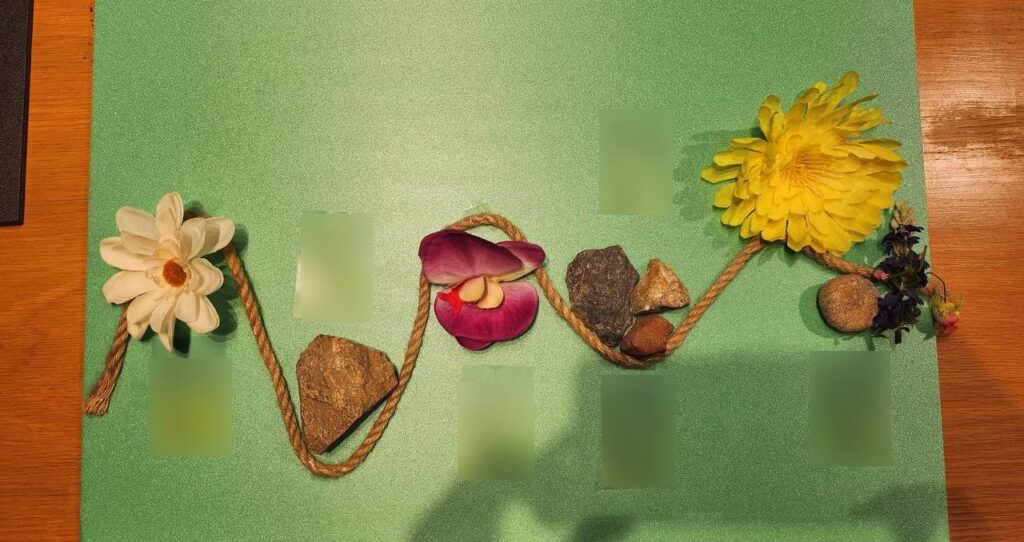
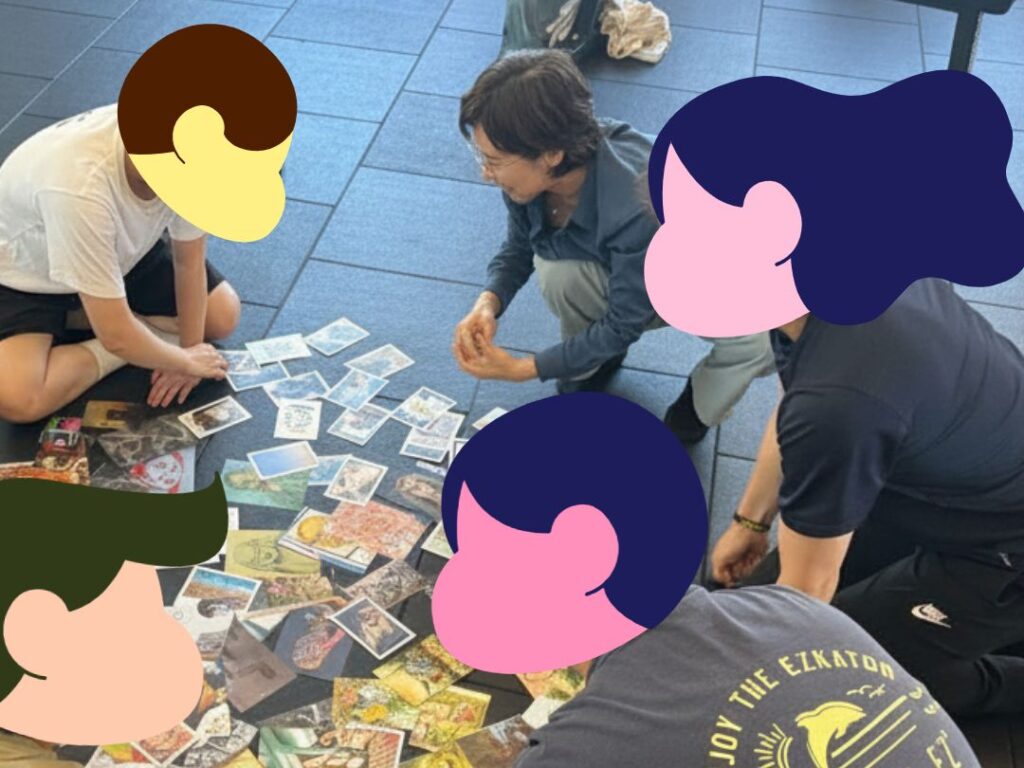
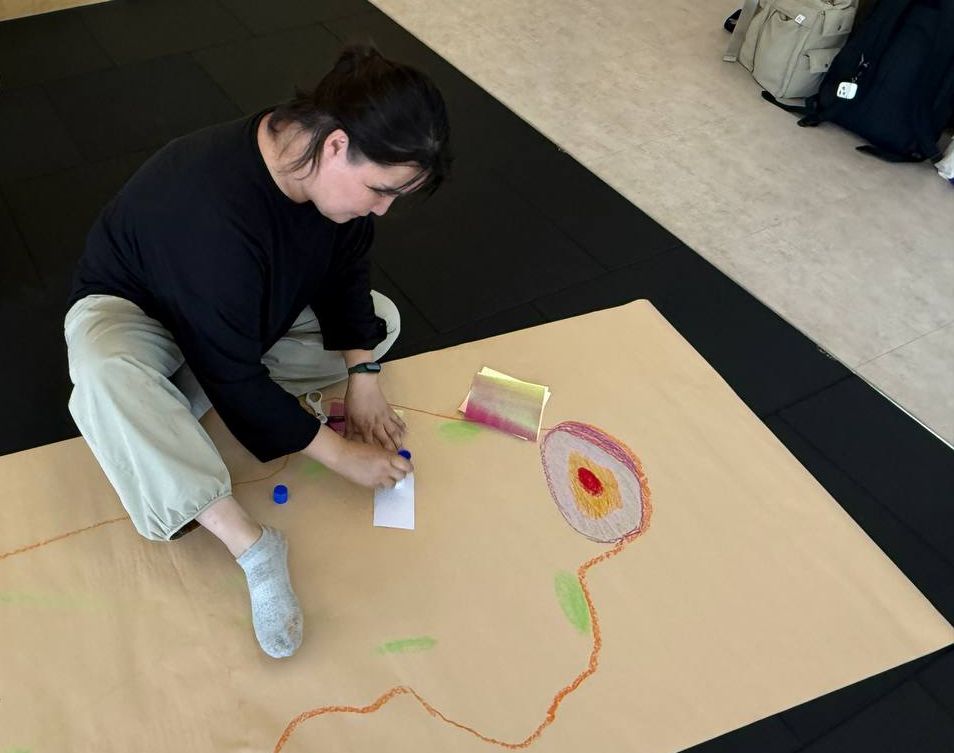
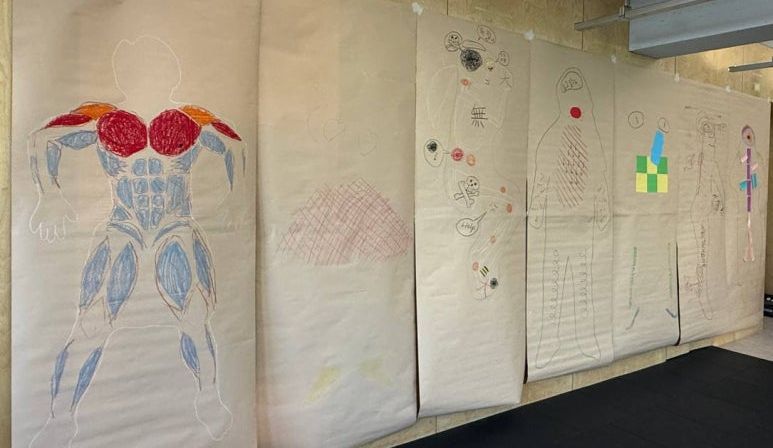
In the first cohort’s mind programme, we met the body as time and space. Through cards and drawing, we noticed who we are now; through life-line work, we looked back at the times through which our bodies have been experienced. Through body scans and body drawing, we explored how we exist in the space that is the body. We shared what it means to live as a trans person, passing through those times and spaces, and how we have experienced our bodies within them.
In the second cohort, we didn’t separate the mind programme and the exercise programme, because we don’t believe body and mind are separate either. Participants moved into movement after fully noticing their feelings and sensations, and experiences in movement came back as the language of the mind. The mind walked towards the body, and the body walked back towards the mind.
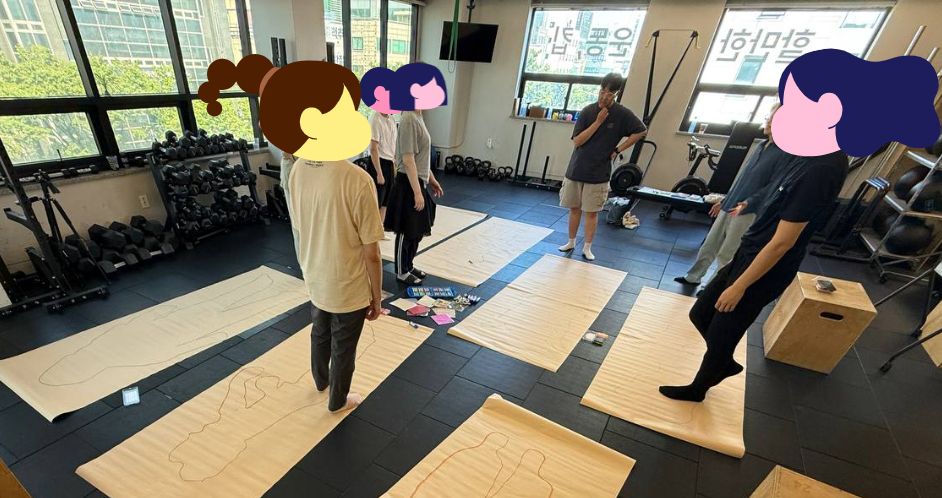
Along the way, traces of lives spent managing and performing the body under others’ gaze would surface. We looked at tension and stiffness long held in the body, noticed the feelings tied to them, expressed them as far as we could, and stayed with them together. Some comforted the self that had lived by shutting off or numbing unwanted parts of the body. There were experiences of comfort arriving even after revealing dysphoria, and moments of satisfaction, of euphoria, when one’s gender was recognised and positively reflected.
Our programme always began with very small movements: noticing yourself breathing in and out; staying for a moment beside the signals your body sends without rushing to interpret them; being a little more safely present in your body so sudden waves of sensation don’t startle you. Of course, 〈Welcome to My Body〉 doesn’t change your body. But I believed it could be a time to meet again the self that has survived, and is living, within that body.
And I still think of the people who couldn’t come. Not because they had no time, but because they hesitated, afraid of being excluded again, of being misgendered, or of being disappointed or rejected by the community and losing their last place to lean on. 〈Welcome to My Body〉 is neither a programme for learning exercise nor one for expressing your feelings well. It’s closer to an attempt to make a space where you can stay with the feeling of being left out. Even if it isn’t a perfect fit, we keep moving to make a place where you can rest for a while, a place where you can at least say you’re OK.
There are many times and spaces we have to walk alone. Some roads are frightening and lonely however hard we try. 〈Welcome to My Body〉 tries to walk those roads together. Taking each other’s stories as signposts, sometimes ahead and sometimes behind, even if we can’t fully understand, we try at least to stand beside each other.
If you remember times when you were there but couldn’t exist, and the space of a body that was surely yours yet felt foreign and precarious, please think of this programme.
Perhaps 〈Welcome to My Body〉 is practice in staying again in a body you once wanted to leave, practice in living without erasing your existence.
– Woo Seung-yeon/Rider –
Every donation to Communi-T goes towards building a trans community space and running the organisation. We’ll keep working so that trans people can be “warmly welcomed just as they are, in their gender identity” and “connect joyfully in a space where they feel at ease”!
🔗 Support Communi-T monthly
A trans community hub supporting self-affirmation and connection for trans people isolated by discrimination and prejudice
Translated from the Korean original, first published on Communi-T’s Naver blog. The translation is machine-assisted; if anything reads oddly, the Korean original is the authoritative version.